
AI Tools Every Personal Injury Law Firm Should Use in 2026
A comprehensive guide to the must-have AI solutions for personal injury practices — from case management and medical record analysis to predictive analytics and marketing automation.
The landscape of personal injury law is undergoing a rapid transformation, driven by the integration of artificial intelligence (AI). In 2026, AI tools are no longer merely innovative additions but essential components for competitive personal injury law firms aiming to optimize operations, enhance client outcomes, and maintain a strategic edge. This guide explores the must-have AI solutions for personal injury practices, detailing their functionalities, benefits, and crucial considerations for implementation, including regulatory compliance and ethical use.
AI adoption in the legal sector has surged, with firmwide implementation in personal injury practices reaching 19% as of 2025, and another 16% planning adoption by fall 2025 according to Anytime AI. Individual AI use among personal injury professionals hit 37% in 2025, surpassing the broader legal industry’s 31% average as reported by Businesswire. Firms that widely adopt AI are nearly three times more likely to report revenue growth, with 77% citing improved operations like document generation per Thomson Reuters.
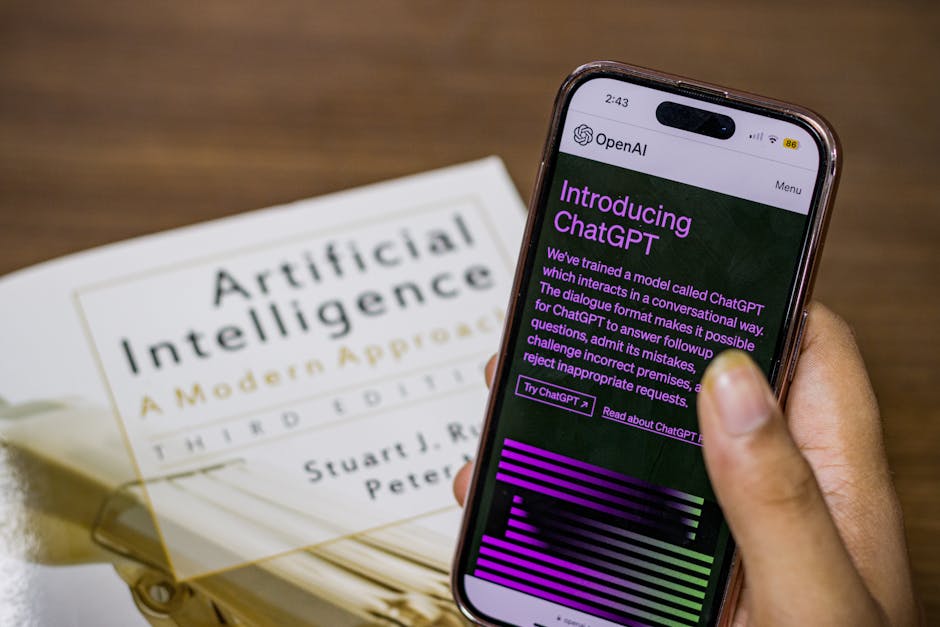
Photo by Sanket Mishra
1. How do AI-Powered Case Management and Document Automation Platforms Streamline Personal Injury Practices?
AI-powered case management and document automation platforms are specialized software solutions that leverage AI to automate repetitive, time-consuming tasks within a personal injury law firm’s workflow, from client intake to settlement. These tools enhance efficiency by automating document generation, managing case files, and integrating seamlessly with existing legal software.
What are the top AI case management platforms for personal injury practices?
Leading AI case management platforms for personal injury include CloudLex, CASEpeer, and SmartAdvocate, all designed with specific workflows for accident and injury cases. These platforms offer robust features tailored to the unique demands of personal injury law.
- CloudLex: Features Lexee AI for drafting, summarizing, and cross-matter search, alongside RecordXtract for medical documents. It provides end-to-end PI lifecycle management and is HIPAA-compliant, hosted on Azure according to CloudLex.
- CASEpeer: Offers automated timelines, comprehensive reporting, and a client portal, ideal for PI organization and tracking as highlighted by Casepeer COO Lucero Smith.
- SmartAdvocate: Known for automating tasks, tracking liens and settlements, and providing over 50 PI-specific reports, suitable for mass tort and PI litigation.
- ProPlaintiff.ai: Specializes in AI document automation for chronologies and demands, offering precision and time savings for PI documents notes ProPlaintiff.ai.
How does AI automate intake forms, demand letters, and settlement calculations?
AI automates these critical tasks by using natural language processing (NLP) to extract relevant data from client inputs and case documents, then populating templates to generate accurate legal documents. Firms using AI-powered case management tools report saving 5–15 hours per demand letter, which allows for higher case volumes without compromising quality per Anytime AI. LegalMation’s AI, for example, automates responses to complaints and discovery requests, reducing time by more than 50%, and up to 80% in many cases reports Bizdata360.
What are the real-world time savings from AI document automation?
AI document automation dramatically reduces the time spent on routine tasks, leading to significant cost savings and increased capacity. Law firms using AI for document review have cut review times by up to 75% according to AIQ Labs. A midsize law firm, for instance, slashed contract review times by 60% using AI tools as reported by the National Law Review. AI automates 66% of hourly billable work in average firms, potentially reducing billing by $27,000 annually per lawyer without model adjustments per CMG Consultants.
How do AI case management platforms integrate with existing legal software?
Modern AI case management platforms are designed for seamless integration with a firm’s existing legal software ecosystem, including Microsoft 365, QuickBooks, and DocuSign. This interoperability ensures data consistency across systems, reduces manual data entry, and centralizes case information for comprehensive management.
2. How do Intelligent Legal Research and Case Law Analysis Tools Enhance Personal Injury Litigation?
Intelligent legal research and case law analysis tools utilize AI to process vast amounts of legal data, identify relevant precedents, and predict potential case outcomes with greater speed and accuracy than traditional methods. These tools are crucial for personal injury firms to build stronger cases and advise clients effectively.
What AI research platforms analyze case law and predict case outcomes?
AI research platforms such as Counsel Stack, Alexi, Midpage, Lexis+ AI, and Thomson Reuters CoCounsel are at the forefront of analyzing case law and predicting legal outcomes.
- Counsel Stack, Alexi, Midpage: These platforms averaged 80% overall accuracy in legal research, outperforming lawyers by nine points according to a Vals AI benchmark.
- Thomson Reuters CoCounsel: Achieved a 79.5% average score across tasks like data extraction, Q&A, summarization, and chronology, exceeding lawyers by over 10 points per task as benchmarked by Thomson Reuters.
- Lexis+ AI: Demonstrated an 83% accuracy rate in Stanford research from lawlibguides.sandiego.edu.
How does AI identify relevant precedents faster than traditional research?
AI identifies relevant precedents by employing natural language processing (NLP) and machine learning to rapidly scan millions of documents, statutes, and case judgments. This allows AI to pinpoint specific legal arguments, factual patterns, and judicial decisions pertinent to a personal injury case far quicker than human researchers.
What is the cost comparison of AI research tools versus traditional legal research?
AI research tools generally offer a more cost-effective solution compared to traditional legal research subscriptions. While specific pricing varies, the efficiency gains from AI — reducing research hours and improving accuracy — often translate to significant cost savings. Firms can expect to save 1-5 hours per week in research time by implementing AI according to LeanLaw.
What accuracy rates and limitations do attorneys need to understand?
Legal AI tools in 2025-2026 show accuracy rates of 70-89% across tasks, often surpassing human lawyers who average 71% per Vals AI. However, attorneys must be aware of “hallucinations,” where AI generates inaccurate or fabricated information. The EU AI Act, fully applicable by August 2026, categorizes legal AI systems as high-risk, mandating conformity assessments and human oversight states Verbit.ai. Mandatory human review is crucial to act as a “liability firewall” against AI errors, which have led to over 700 court cases worldwide by 2026 as predicted by Artificial Lawyer.
3. How do AI Client Communication and Intake Assistants Improve Engagement?
AI client communication and intake assistants are virtual tools, often chatbots or expert AI clones, designed to handle initial client interactions, qualify leads, and streamline the intake process. These assistants provide 24/7 responsiveness, ensuring potential clients receive immediate attention.
What AI chatbots and virtual assistants are best for 24/7 client intake and communication?
AI chatbots and virtual assistants are increasingly vital for personal injury firms, providing round-the-clock support and efficient lead management.
- MyClone: Utilizes AI digital personas revolutionizing legal services to create bespoke virtual assistants that handle inquiries, qualify leads, and provide consistent, branded communication.
- General Chatbots: Provide immediate responses to common questions and guide potential clients through the initial intake steps.
- AI Virtual Assistants: Can schedule consultations, collect preliminary information, and ensure no lead is missed, even outside business hours.
These tools leverage understanding what an AI persona is to deliver highly personalized and efficient client interactions, allowing firms to explore the features of AI tools for law firms.
How does AI qualify leads and schedule consultations automatically?
AI qualifies leads by asking a series of predetermined questions based on firm-specific criteria, assessing the potential client’s case viability and alignment with the firm’s services. Once qualified, the AI assistant can automatically schedule consultations by integrating with attorneys’ calendars, sending out reminders, and managing rescheduling — all without human intervention. This structured 24/7 intake system, often AI-enabled, can lead to 30% higher conversion rates reports PracticeProof.com.
What are the multilingual capabilities of AI communication tools for diverse client bases?
Many AI communication tools offer robust multilingual capabilities, allowing firms to serve diverse client bases effectively. These tools can communicate in multiple languages, translate inquiries in real-time, and provide information in a client’s native tongue, thereby expanding reach and improving client satisfaction.
How do firms maintain the human touch while leveraging AI efficiency?
Firms maintain the human touch by strategically deploying AI for initial, repetitive tasks, freeing human staff to focus on complex inquiries and empathetic client interactions. AI handles the volume, while attorneys provide the personalized legal counsel and emotional support critical in personal injury cases. The integration of expert AI clones for legal professionals can further enhance this balance.
 Photo by Markus Winkler
4. How does Medical Record Analysis and Summarization AI Benefit Personal Injury Firms?
Medical record analysis and summarization AI tools automate the extraction, organization, and summarization of critical information from vast medical records. These tools are indispensable for personal injury firms, saving significant time and improving the accuracy of damages calculations.
What AI tools extract key information from medical records in minutes?
AI tools such as NexLaw.ai, EvenUp MedChrons™, LawPro.ai, InPractice AI, and Supio are designed to quickly extract key information from medical records.
- NexLaw.ai: Offers a 90% time reduction in case preparation, processing over 5,000 pages in under 20 minutes with 99% accuracy according to NexLaw.ai.
- EvenUp MedChrons™: Provides hyperlinked chronologies and visual timelines, aiding in securing significant judgments and streamlining trial prep as demonstrated by EvenUp Law.
- LawPro.ai: Creates medical chronologies in minutes, reducing review time from days or weeks per LawPro.ai.
- InPractice AI: Offers instant summaries and duplicate detection for comprehensive medical record review notes InPractice AI.
How does AI identify injury patterns and calculate medical damages?
AI identifies injury patterns by analyzing diagnostic codes, treatment narratives, and physician notes within medical records to highlight relevant injuries, pre-existing conditions, and their causal links to the incident. It calculates medical damages by extracting billing codes, treatment costs, and future care recommendations, providing a comprehensive financial picture. NexLaw, for example, helps uncover hidden injuries like shoulder issues or psychological impacts in slip-and-fall cases, strengthening damages claims explains NexLaw.ai.
What are the accuracy benchmarks and quality control processes for medical record AI?
AI medical record review tools report high accuracy, often exceeding 99% as noted by NexLaw.ai, compared to manual review. Quality control processes typically involve a combination of AI automation for initial extraction and summarization, followed by human oversight from paralegals or attorneys to verify accuracy and contextual relevance.
How do these tools integrate with medical billing and lien resolution workflows?
These AI tools integrate with medical billing and lien resolution workflows by automatically extracting relevant billing codes and treatment costs, and then organizing this data for lien negotiation and settlement calculations. This streamlines the process of tracking outstanding medical bills and resolving liens.
5. How do Predictive Analytics for Case Valuation and Settlement Enhance Negotiation Strategies?
Predictive analytics for case valuation and settlement uses machine learning algorithms to analyze historical case data, legal precedents, and judicial patterns to forecast potential case outcomes and settlement ranges.
What AI platforms analyze historical data to predict case values?
AI platforms like Lex Machina and Pre/Dicta analyze vast historical data, including past settlements, jury verdicts, and judge behavior, to predict case values.
- Lex Machina: Predicts case outcomes with 70-80% accuracy across various case types according to NexLaw.ai.
- Pre/Dicta: Achieves up to 85% accuracy for motions to dismiss per NexLaw.ai.
- Paxton Data: Integrates objective valuation using medical benchmarks, venue trends, and judge patterns to flag high-value cases early.
How does machine learning improve settlement negotiation strategies?
Machine learning improves settlement negotiation strategies by identifying optimal settlement ranges, predicting opposing counsel’s tactics, and assessing the likelihood of success at trial. This data-driven approach allows personal injury attorneys to negotiate with greater confidence and leverage, leading to 25-35% higher average settlement values and 34% increased settlement success rates reports Aguiar Injury Lawyers.
What risk assessment tools identify high-value versus low-value cases?
Predictive analytics tools act as risk assessment tools by analyzing case characteristics against historical data to identify cases with higher settlement potential. AI-driven predictions have reduced settlement timelines by an average of 3 months notes Aguiar Injury Lawyers.
What are the data privacy and security considerations for predictive analytics?
Data privacy and security are paramount. Firms must ensure that AI platforms are HIPAA-compliant, use robust encryption, and adhere to strict data governance policies. The ABA’s Formal Opinion 512 (2024) mandates competent representation, client confidentiality, and appropriate supervision when using AI per FederalBarCLE.org.
6. How do AI-Enhanced Marketing and Client Acquisition Tools Boost Law Firm Growth?
AI-enhanced marketing and client acquisition tools leverage artificial intelligence to optimize digital marketing efforts, identify high-value leads, and automate client outreach.
What AI-powered SEO and content marketing tools are effective for law firm websites?
- AI Content Generators: Help create blog posts, articles, and website copy optimized for legal SEO.
- SEO Analytics Tools: Provide insights into keyword performance, backlink opportunities, and technical SEO issues.
- AI Overviews: Google AI Overviews and similar tools now top search results, making AI-optimized content critical for visibility as discussed by Attorney at Law Magazine.
How does predictive lead scoring identify highest-value potential clients?
Predictive lead scoring uses AI to analyze potential client data to assign a score indicating their likelihood of conversion and potential case value. Firms responding to leads within 5 minutes are 21 times more likely to convert them per Navazon Digital.
How does AI automate ad optimization for personal injury case acquisition?
AI automates ad optimization by continuously analyzing campaign performance data, adjusting bids, targeting, and ad creatives in real-time to maximize ROI.
How do AI analytics track ROI and attribution modeling?
AI analytics track ROI and attribution modeling by correlating marketing spend with client acquisition and case outcomes.
For more insights on AI in the legal field, visit our AI blog.
Top AI Tools for Personal Injury Law Firms: Feature Comparison
| Tool Category | Best For | Key Features | Pricing Range | Integration Capability |
|---|---|---|---|---|
| AI Case Management Platform | End-to-end PI lifecycle management | AI drafting, summarizing, automated tasks, HIPAA compliance, client portals | $100-$1000+/month (per user/firm) | MS365, QuickBooks, DocuSign, CRM |
| Legal Research AI Tool | Accurate case law analysis, outcome prediction | NLP for precedent identification, summarization, query answering, citation verification | $500-$5000/user/month (for advanced) | Existing legal research databases (Westlaw, LexisNexis) |
| Client Intake AI Assistant (MyClone) | 24/7 client communication, lead qualification | AI chatbots, virtual assistants, multilingual support, automated scheduling, personalized client interactions | $50-$500/month (platform-dependent) | CRM, Calendaring systems, Firm websites |
| Medical Record Analysis AI | Rapid extraction & summarization of medical records | Injury pattern identification, damage calculation, medical chronology generation, duplicate detection | $150-$750/case or monthly subscription | Case management systems, billing software |
| Predictive Case Valuation Tool | Optimizing settlement negotiations, risk assessment | Historical data analysis, outcome prediction (70-85% accuracy), judge/venue analytics, settlement range estimation | $500-$5000/user/month (for litigators) | Case management systems, internal data repositories |
| Marketing & Lead Generation AI | Client acquisition, ROI tracking | AI-powered SEO, content generation, predictive lead scoring, automated ad optimization, attribution modeling | $100-$1000+/month (platform-dependent) | Website CMS, CRM, Ad platforms (Google Ads, Social Media) |
Implementation Roadmap: Getting Started with AI in Your Firm
Adopting AI tools successfully requires a strategic approach.
What is a step-by-step approach to evaluating and adopting AI tools?
- Assess Firm Needs: Identify specific pain points and repetitive tasks that AI can address.
- Research & Demo Tools: Explore various AI solutions, focusing on personal injury specific platforms like CloudLex or EvenUp notes ProPlaintiff.ai.
- Pilot Program: Start with one or two high-impact tools on a small scale.
- Evaluate & Refine: Measure the initial ROI and adjust usage based on performance.
- Scale & Integrate: Roll out successful tools across the firm.
What training requirements and change management strategies are necessary?
Training staff adequately and establishing clear AI policies are crucial per Businesswire.
What are the budget considerations and expected timeline to ROI?
Budget considerations range from entry-level solutions at $100-$500/month to enterprise platforms exceeding $2000+/month. The expected timeline to ROI is 6-18 months per BestLawFirms.com.
What are common implementation pitfalls and how can they be avoided?
Common pitfalls include lack of clear objectives, insufficient training, data fragmentation, and neglecting ethical considerations.
Key Takeaways
- AI tools are essential for competitive personal injury law firms in 2026.
- AI-powered case management and document automation save significant time, reducing demand letter preparation by 5-15 hours per letter.
- Intelligent legal research tools achieve 70-89% accuracy, often outperforming human lawyers.
- AI client intake assistants provide 24/7 support, enhancing lead qualification and client communication.
- Medical record analysis AI reduces review time by 90% and contributes to 30% higher settlements.
- Predictive analytics boosts settlement success rates by 34% and increases average settlement values by 25-35%.
- Ethical guidelines from the ABA emphasize human oversight, data privacy, and transparency in AI use.
Conclusion: Future-Proofing Your Personal Injury Practice
The integration of AI tools is no longer a luxury but a necessity for personal injury law firms. From automating mundane tasks and streamlining case management to enhancing client communication and predicting case outcomes, AI offers a competitive advantage. Start by identifying a single high-impact area for AI adoption and scale your efforts incrementally.
Frequently Asked Questions
What is the best AI tool for personal injury lawyers in 2026?
The “best” AI tool depends on a firm’s specific needs and size. For case management, CloudLex and CASEpeer are top-rated. For legal research, Thomson Reuters CoCounsel offers high accuracy. For client communication, MyClone provides personalized AI assistants.
How much does AI software cost for a personal injury law firm?
AI software costs vary widely. Entry-level solutions range from $50-$500 per month. Comprehensive AI case management platforms cost $100-$1000+ per user per month. Specialized predictive analytics tools range from $500-$5000 per user per month, with ROI often seen within 6-18 months.
 Photo by Markus Winkler
Can AI really analyze medical records accurately for injury cases?
Yes. Tools like NexLaw.ai report 99% accuracy in processing medical records, reducing review time by 90% according to NexLaw.ai. However, human attorney review remains crucial for contextual understanding.
How do I implement AI tools without disrupting my current workflow?
Start by identifying one high-impact area, pilot a single tool, provide thorough staff training, and integrate incrementally. Explore the features of AI tools for law firms.
Is using AI in personal injury law ethically compliant?
Yes, provided firms adhere to ABA guidelines. The ABA’s Formal Opinion 512 (2024) emphasizes competent representation, client confidentiality, and supervision per FederalBarCLE.org.
What ROI can I expect from investing in AI tools for my firm?
Expect time savings of 5-15 hours per demand letter and up to 75% reduction in document review times. Firms can achieve 25-35% higher average settlement values and 34% increase in settlement success rates. Typical payback period is 6-18 months.
Enjoyed this article?
Share it with your network and help others discover valuable insights!
Related Articles
Continue exploring similar topics

AI Legal Intake Software for Personal Injury Law Firms
AI legal intake software captures, qualifies, and routes potential client inquiries automatically. Learn why intake is conversion infrastructure for personal injury firms and how AI intake outperforms manual processes and basic chatbots.

Will Lawyers Be Replaced by AI? The Truth About Automation
An evidence-based analysis of how AI is transforming legal practice in 2026 — examining what AI can and cannot do, employment data, the irreducible human elements, and how to future-proof your legal career.

7 Ways AI Can Eliminate Administrative Tasks in Law Firms
Discover seven specific ways AI eliminates administrative burden in law firms — from automated document generation and intelligent email management to smart billing, scheduling, and reporting.